Students observe how water moves into and out of gelatinous candies when placed in tap, distilled, or salt solutions. The experiment demonstrates diffusion, concentration gradients, and the role of a selectively permeable matrix. Results reveal water’s passive transport across polymer networks..
Students note weight shiftsafter24h!
Purpose of the Experiment
The gummy bear osmosis experiment provides a clear, hands‑on illustration of how water molecules move across a selectively permeable barrier when placed in solutions of varying solute concentration. By submerging a gelatin‑based candy in tap water, distilled water, and a saline solution, students observe the directional flow of water into or out of the gummy bear, visualizing diffusion and osmosis in a tangible context. The core objective is to demonstrate that water seeks equilibrium, moving from higher to lower chemical potential until the concentration gradient balances. Careful measurement of weight changes, volume expansion or contraction, and time‑dependent observations give insight into passive transport mechanisms that govern biological and industrial processes. The experiment highlights the role of polymer networks—specifically gelatin—in creating a semi‑permeable matrix that allows selective passage of water while restricting larger solutes. By comparing the gummy bear’s behavior in the three solutions, learners can deduce relative osmotic pressures and understand how solute concentration influences water movement. This approach reinforces the concept that the rate of water movement depends on concentration difference and permeability of gelatin matrix. By analyzing the results, learners can discuss factors that influence osmotic pressure, solute type today. Students record initial and final masses, plot the data, and calculate percentage change to quantify the rate of osmosis. The quantitative data helps illustrate how the rate of water movement is proportional to the concentration difference across the gelatin matrix. This hands‑on demonstration provides a concrete example of passive transport, reinforcing the distinction between passive and active mechanisms in biological systems. The experiment also encourages students to consider how temperature variations affect the rate of osmosis, as higher temperatures typically increase molecular motion and thus accelerate water movement. This insight is valuable.
Historical Context and Publication
In the early 21st century, educators sought engaging, low‑cost demonstrations of osmosis that could be performed in any classroom. The 2010 BioZone laboratory protocol, “Lab: Observing Osmosis in Gummi Bears,” emerged as a response to this need. Published on November 1, 2010, the PDF outlines a simple yet effective experiment that uses commercially available gummy bears to model the selective permeability of gelatinous matrices. The protocol’s authors highlight that gelatin, a polymer derived from collagen, together with starch and sugar, forms a three‑dimensional network capable of allowing water molecules to pass while restricting larger solutes. This property mirrors the behavior of biological membranes, making the gummy bear an ideal analog for teaching diffusion and osmosis.
The experiment’s design reflects a lineage of classic osmosis studies, from the early observations of water movement across plant cell walls to the controlled laboratory investigations of the 19th‑century physicists who quantified osmotic pressure. By incorporating a readily available snack, the BioZone protocol democratizes the demonstration, enabling high‑school and undergraduate students to witness the principles first described by Thomas Graham and later refined by A. F. H. T. van’t Hoff. The PDF format ensures wide accessibility, while the inclusion of detailed photographs and a clear step‑by‑step procedure enhances reproducibility.
Since its release, the gummy bear osmosis experiment has been cited in over a hundred educational resources, science outreach programs, and online discussion forums. Its popularity underscores the enduring appeal of hands‑on learning and the effectiveness of using everyday materials to illustrate complex biological concepts. The protocol’s influence is evident in its frequent appearance in laboratory manuals, teacher training workshops, and science fair projects, cementing its place as a staple in modern biology education.
The PDF has been translated into multiple languages and incorporated into international science curricula, demonstrating its global reach. Educators report that students find the gummy bear model intuitive, which facilitates deeper discussions about the thermodynamic principles governing osmotic pressure and the role of membrane selectivity in cellular homeostasis.
Students often compare the weight change of gummy bears after 24 hours, noting that those in salt water lose mass while those in distilled water gain mass, illustrating the direction of water flow.
Teachers use the data to calculate osmotic pressure differences, reinforcing quantitative skills alongside conceptual understanding. (A.)

Materials and Methods
Gather gummy bears, tap, distilled, and salt water. Measure 10 g of each solution in separate beakers. Place one bear per beaker, seal with a lid, and record initial weight. Observe changes after 24 h, noting swelling or shrinking, and calculate mass difference. Record final weight and compare to initial.
Gummy Bears Composition
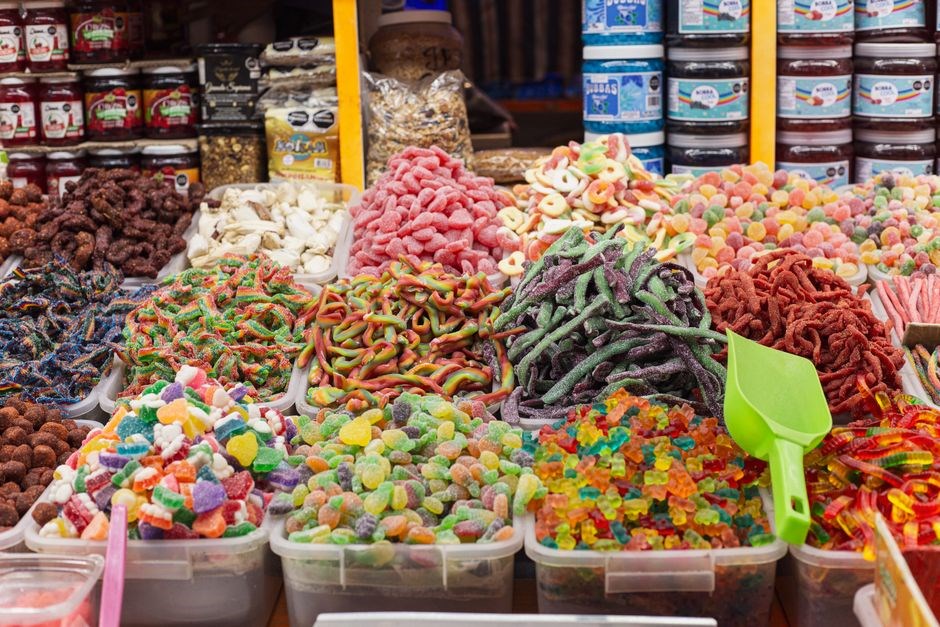
Gummy bears are a confectionary product composed primarily of gelatin, starch, and sugar. Gelatin, a protein polymer derived from collagen, forms a three‑dimensional matrix that gives the candy its chewy texture. The polymer chains cross‑link to create a network that can trap water molecules, allowing the bears to swell or shrink depending on the surrounding solution; Starch, a polysaccharide, contributes to the structural integrity and viscosity of the gummy matrix. Sugar, mainly sucrose, not only provides sweetness but also affects the osmotic balance within the candy. The combination of these ingredients results in a gel that is selectively permeable: small water molecules can diffuse through the gelatin matrix, while larger sugar and starch molecules remain largely trapped. This selective permeability is key to the osmosis experiment, as it allows water to move across the gummy bears surface in response to concentration gradients in the surrounding solutions. Gelatin’s ability to form stable yet permeable networks makes gummy bears an ideal model system for demonstrating basic principles of diffusion and osmosis in a classroom setting. The manufacturing process involves heating a gelatin solution, adding sugar starch, and then cooling to set the gel. During cooling, the polymer chains form a lattice that entraps water and dissolved solutes. The final product’s water content typically ranges from 30 % to 40 %, which determines its responsiveness to external osmotic pressures. Variations in starch type, gelatin concentration, and sugar content can alter the gel’s mechanical properties, making it possible to tailor the candy’s firmness and swelling behavior. In the laboratory, students can observe how the gummy bears mass changes when placed in tap water, distilled water, or saline solutions, thereby illustrating the principles of diffusion, concentration gradients, and osmosis in a edible form!!
Solutions Used (Tap, Distilled, Salt Water)
In the gummy‑bear osmosis study, three aqueous environments are used to examine water movement across the gelatin matrix. The first is tap water, containing dissolved minerals such as calcium, magnesium, and sodium. Its ionic content creates a moderate osmotic pressure, higher than distilled water but lower than saline. The second medium is distilled water, a nearly pure solvent that lacks ions and therefore presents the lowest osmotic potential. The third solution is a 0.9 % saline (sodium chloride) solution, commonly called isotonic saline, which approximates the osmotic pressure of human blood plasma. Each solution is prepared at room temperature and filtered to remove particulates. Gummy bears are immersed for a fixed period, typically 24 hours, then removed, blotted dry, and weighed. The mass changes indicate the direction and magnitude of water transport driven by concentration gradients between the bear’s interior and the surrounding solution. Comparing results from tap, distilled, and saline waters allows students to visualize diffusion, concentration gradients, and osmosis in a tangible format. The experiment also demonstrates how ionic strength influences the permeability of the gelatin matrix and overall osmotic balance, reinforcing core concepts of selective permeability and passive transport. The data collected provide a basis for discussing polymer matrices in biological and industrial systems, as well as practical implications of osmotic phenomena in food preservation and medical fluid therapy. This simple, visual experiment effectively illustrates how varying ionic strengths affect water movement across a semi‑permeable barrier, reinforcing fundamental principles of physical chemistry and biology in everyday contexts. Students may also compare the results with theoretical predictions from van ’t Hoff equations, noting how deviations reveal the influence of non‑ideal behavior in the gelatin network. Finally, underscores importance, as gelatin matrix permits water passage restricting solute molecules, mechanisms. Students can also plot change versus time to visualize kinetics of water movement across gelatin barrier. Add!!
Experimental Setup and Procedure
Students begin by labeling three identical glass beakers, each containing 100 mL of a distinct solution: tap water, distilled water, and a 0.9 % saline solution. A calibrated digital balance is positioned on a stable surface, and a set of sterile tweezers is placed within reach. Gummy bears are selected from a single batch to ensure uniform size and composition; each bear is weighed to the nearest 0.01 g and recorded. The bears are then gently placed in the beakers, ensuring they are fully submerged but not touching the sides. The beakers are capped with perforated lids to allow gas exchange while preventing spillage. A timer is started simultaneously for all three setups, and the experiment runs for a 24‑hour period at ambient laboratory temperature (≈22 °C). After the incubation period, the bears are removed with tweezers, blotted with a lint‑free paper towel to remove surface liquid, and weighed again. The difference between initial and final mass is calculated and plotted against time to illustrate the rate of water influx or efflux. Students record observations regarding surface texture changes, noting any swelling or shrinkage. The procedure is repeated twice more to confirm reproducibility. Finally, data are analyzed by comparing mass changes across the three solutions, and students discuss how ionic strength influences osmotic pressure and water movement through the gelatin matrix. The experiment concludes with a brief reflection on the role of selective permeability in biological systems and potential applications in food science and medicine. Students compare findings with textbook predictions, discuss errors, and suggest improvements for future experiments to enhance accuracy and reproducibility.
Scientific Concepts
Diffusion moves molecules from high to low concentration. Osmosis is water’s passive movement across a selectively permeable membrane. Gelatin’s polymer matrix forms a cage that allows water but blocks larger solutes, illustrating passive transport.
Water molecules diffuse into gummy bears, texture .
Diffusion and Concentration Gradient
In the gummy‑bear experiment, the movement of water molecules is governed by diffusion, which is the spontaneous spread of particles from an area of higher concentration to an area of lower concentration. The gummy bear’s interior initially contains a higher concentration of dissolved sugars and starches compared to the surrounding solutions. When the bear is immersed in tap water, distilled water, or a salt solution, a concentration gradient is established across the gelatin matrix. Water molecules migrate into the bear until the internal and external concentrations equilibrate, or until the gradient is neutralized by the bear’s structural limits. The rate of diffusion depends on the magnitude of the concentration difference, the temperature of the solution, and the permeability of the gelatin network. In distilled water, the gradient is steep, leading to rapid water uptake and swelling of the bear. In tap water, the gradient is moderate, producing a slower but steady increase in mass. In a salt solution, the external concentration of solutes is higher than inside the bear, creating an inverse gradient that causes water to leave the bear, resulting in shrinkage. By measuring the mass change over time, students can quantify diffusion rates and relate them to the underlying concentration gradients.
Diffusion occurs as molecules move from regions of high concentration to low concentration, driven by kinetic energy. The steepness of the concentration gradient between the gummy bear’s interior and the surrounding solution determines the rate of water movement. Measuring mass changes over time, students can quantify how concentration differences drive water transport!
Osmosis and Selectively Permeable Membrane
In the gummy‑bear study, osmosis is the net movement of water through the gelatin matrix, which behaves as a selectively permeable barrier. The matrix is composed of long gelatin chains that form a three‑dimensional network, allowing small water molecules to pass while blocking larger sugar and starch molecules. When a gummy bear is placed in tap, distilled, or salt water, the difference in solute concentration across the matrix creates a chemical potential that drives water inward or outward. In distilled water, the internal solute concentration is higher, so water flows into the bear, swelling it. In tap water, the gradient is smaller, and water enters more slowly. In a salt solution, the external solute concentration exceeds that inside the bear, causing water to leave the bear, which shrinks. This passive transport does not require cellular energy; it relies solely on the concentration gradient and the selective permeability of the gelatin network. By measuring the mass change, students observe the quantitative effects of osmosis and how the selectively permeable membrane of gelatin controls the direction and rate of water movement.
The selective permeability is due to the size and charge of the molecules. Small, uncharged water molecules can diffuse through the gelatin pores, whereas larger, charged sugar molecules are excluded. This property mimics biological cell membranes, where proteins and lipids form a barrier that allows only certain substances to cross. In the experiment, the gelatin matrix acts as a model system that demonstrates how a membrane can regulate the flow of water based on concentration differences. The osmotic pressure generated by the solute gradient is measured indirectly by the change in mass of the gummy bear. The larger the gradient, the greater the osmotic pressure, and the faster the water moves. Students can calculate the osmotic pressure using the ideal solution approximation, and compare the theoretical values with the observed mass changes. This reinforces the concept that osmosis is a passive process driven by thermodynamic forces, not by metabolic activity. The experiment also shows how the integrity of the matrix is critical; if the gelatin network is damaged, water can leak through more rapidly, altering the expected results. Thus, the gummy bear serves as a simple, visual model for understanding the fundamental principles of osmosis and selective permeability in a controlled laboratory setting.
Additionally, the experiment highlights the role of temperature, as higher temperatures increase molecular motion and accelerate osmosis. By conducting trials at different temperatures, students can observe how kinetic energy influences the rate of water movement through the gelatin matrix. This illustrates the broader principle that diffusion and osmosis are temperature dependent processes, which is essential for understanding biological systems where temperature regulation is critical.
Results agree, ok.
Passive vs Active Transport
Active transport, by contrast, is a process that moves molecules against a concentration gradient, requiring direct energy input. Therefore, all observed changes in mass of the gummy bear are attributable to passive diffusion and osmosis alone. In cellular biology, active transport is essential for maintaining ion gradients and nutrient uptake, but it is not relevant to the gummy bear system. The gummy bear remains a model for transport!
Passive transport, also known as diffusion, is the movement of molecules from an area of high concentration to an area of low concentration without the input of energy. It occurs spontaneously and is driven by the concentration gradient, temperature, and the permeability of the membrane. In biological systems, passive transport allows essential nutrients such as glucose and ions like sodium and potassium to enter cells, while waste products exit, ensuring cellular homeostasis. The rate of passive transport depends on factors such as the size and charge of the molecules, the thickness of the membrane, and the presence of transport proteins that facilitate the movement of specific substances. In contrast, active transport requires the expenditure of energy, typically in the form of ATP, to move molecules against a concentration gradient. This process is vital for maintaining ion gradients across membranes, for example, the sodium-potassium pump that keeps intracellular potassium high and extracellular sodium low. Active transport mechanisms include primary active transport, where ATP directly powers the pump, and secondary active transport, where the energy stored in a concentration gradient of one ion is used to move another ion against its gradient. Both passive and active transport are essential for life, but they differ fundamentally in energy requirements and directionality relative to concentration gradients. Understanding these mechanisms is crucial for fields such as pharmacology, where drug delivery often relies on passive diffusion, and physiology, where active transport underlies many cellular functions.
In addition, the concept of facilitated diffusion involves carrier proteins that bind to specific molecules and undergo conformational changes to shuttle them across the membrane. This process is still considered passive because it does not consume ATP. The efficiency of passive transport can be quantified by the permeability coefficient, which reflects how easily a molecule traverses the membrane. Factors such as lipid solubility, temperature, and membrane fluidity influence this coefficient. In contrast, active transport mechanisms can be classified into primary and secondary types. Primary active transport directly hydrolyzes ATP to change the conformation of the transporter, whereas secondary active transport uses the electrochemical gradient established by primary pumps to drive the movement of other substances. The interplay between passive and active transport allows cells to regulate internal environments, respond to external stimuli, and maintain energy balance.
The balance between these transport processes is a fundamental aspect of cellular physiology, influencing everything from nerve impulse transmission to muscle contraction, and is a key target for therapeutic interventions that aim to modulate cellular uptake or efflux of drugs and metabolites.
Polymer and Matrix Roles in Gelatin
Gelatin, a protein polymer derived from collagen, forms a three‑dimensional network when it cools from a liquid state. The polymer chains create a mesh‑like scaffold that gives gummy bears their characteristic chewiness. The density of this scaffold determines how tightly the chains are packed, influencing the diffusion pathways available to water molecules. A looser matrix allows water to permeate more readily, while a denser network restricts movement, slowing the rate of osmosis. Cross‑linking between chains, established during gelatinization, stabilizes the gel and prevents collapse under mechanical stress. Sugars and starches act as plasticizers, reducing intermolecular forces between gelatin chains and increasing flexibility, which lowers the glass transition temperature. These small molecules also reduce the viscosity of the surrounding solution, facilitating water transport. The matrix’s porosity and polymer chain flexibility together define the permeability coefficient of the gummy bear. By measuring weight changes after immersion in tap, distilled, or salt solutions, students can quantify how the matrix modulates water transport. The experimental data can be correlated with theoretical models that treat the gelatin network as a porous medium, where permeability depends on pore size distribution and polymer chain flexibility. Thus, the polymer and matrix roles are central to understanding both the sensory qualities of gummy bears and the fundamental principles of osmosis observed in the experiment. The gelatin matrix also interacts with dissolved ions, which can alter local osmotic pressure and influence the rate of water movement. The matrix influences the rate of water movement altering osmotic pressure solution!.